



Introduction
Pinewood Derby Car Fenders: The Pinewood Derby, a time-honored tradition in scouting organizations worldwide, brings together creativity, craftsmanship, and friendly competition. At the heart of this beloved event are the Pinewood Derby cars, meticulously crafted by eager scouts and their families. While the design and construction of these miniature racing machines often focus on speed and aerodynamics, one often overlooked yet crucial element is the car fenders.
Fenders, typically associated with full-sized automobiles, serve a similar purpose in the world of Pinewood Derby racing. These small, strategically placed structures not only add aesthetic appeal but also play a pivotal role in the car’s performance on the track. By reducing air resistance and preventing friction against the track’s surface, well-designed fenders can give a competitive edge to any Pinewood Derby car.
In this guide, we delve into the significance of Pinewood Derby car fenders, exploring their design principles, construction techniques, and impact on race-day success. Whether you’re a seasoned derby enthusiast or a newcomer to the world of miniature racing, understanding the importance of fenders will undoubtedly enhance your appreciation for this cherished scouting tradition. Join us as we uncover the secrets behind crafting fenders that not only look sleek but also propel your Pinewood Derby car to victory.
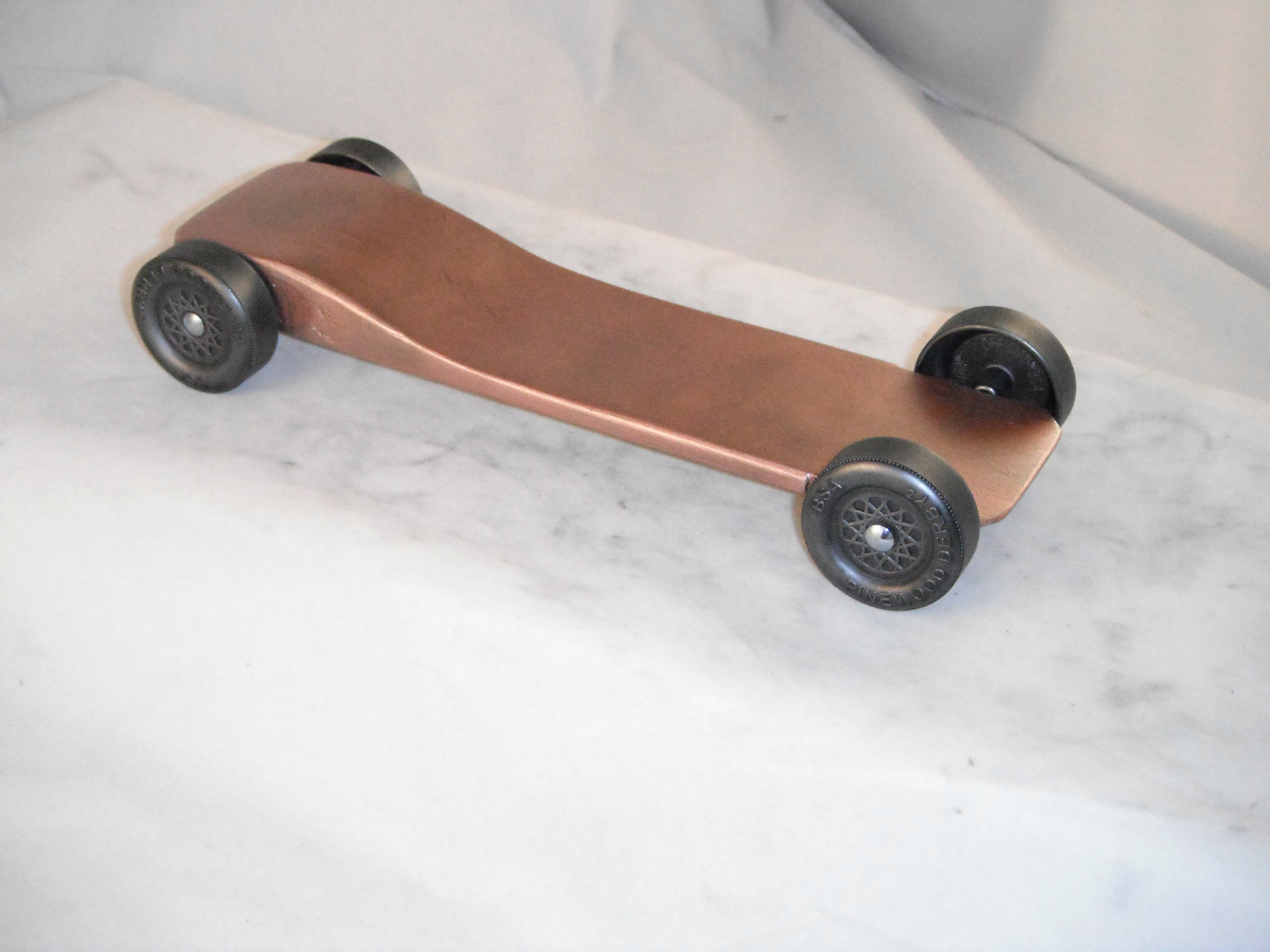
Do fenders help a Pinewood Derby car?
Fenders can help efficiently direct the air around the wheels resulting in more speed. There are a few different types of fenders: Leading Edge Fenders: These fenders are placed in front of the wheels and help direct air over them, leading to a faster car.
Fenders play a crucial role in enhancing the performance of a Pinewood Derby car. While their primary function may seem to be aesthetic, they also serve practical purposes that can significantly impact the car’s speed and stability on the track.
Firstly, fenders help reduce air resistance by smoothing airflow around the car’s wheels, body, and axles. This aerodynamic advantage can lead to increased speed and improved racing performance. Additionally, fenders can help minimize friction between the car and the track surface, especially during turns, by preventing the body from scraping against the track.
Furthermore, well-designed fenders can contribute to the overall stability of the car, helping it maintain a straight trajectory and preventing it from tipping or veering off course. By optimizing airflow, reducing friction, and enhancing stability, fenders undoubtedly play a vital role in maximizing the speed and competitiveness of a Pinewood Derby car. Therefore, incorporating carefully crafted fenders into your car design can make a significant difference in its performance on race day.
How do you attach fenders to a Pinewood Derby car?
Position the fenders so that there is equal spacing around the wheels. The bottom of the fender may not be flush with the bottom of the block. Glue the fenders to the block with a good wood glue. Secure in place with clamps or rubber bands.
Attaching fenders to a Pinewood Derby car requires precision and attention to detail to ensure optimal performance on race day. Here’s a step-by-step guide to securely affixing fenders to your miniature racing machine:
Design and Cut Fenders: Begin by designing and cutting out the fenders from lightweight materials such as balsa wood or thin plastic. Ensure the fenders are aerodynamic and complement the overall design of your car.
Sand and Shape: Use sandpaper to smooth the edges of the fenders and shape them to fit snugly against the body of the car. This step helps reduce air resistance and ensures a seamless integration.
Attach with Glue: Apply a small amount of strong adhesive, such as wood glue or super glue, to the contact points between the fenders and the car body. Press the fenders firmly in place and hold them until the glue sets.
Reinforce if Necessary: For added durability, consider reinforcing the attachment points with small screws or pins. This extra step can prevent fenders from coming loose during races.
Test and Adjust: Once the glue has fully dried, test the car on a practice track to ensure the fenders do not interfere with the wheels’ movement. Make any necessary adjustments for optimal performance.
What is the fastest shape for a Pinewood Derby car?
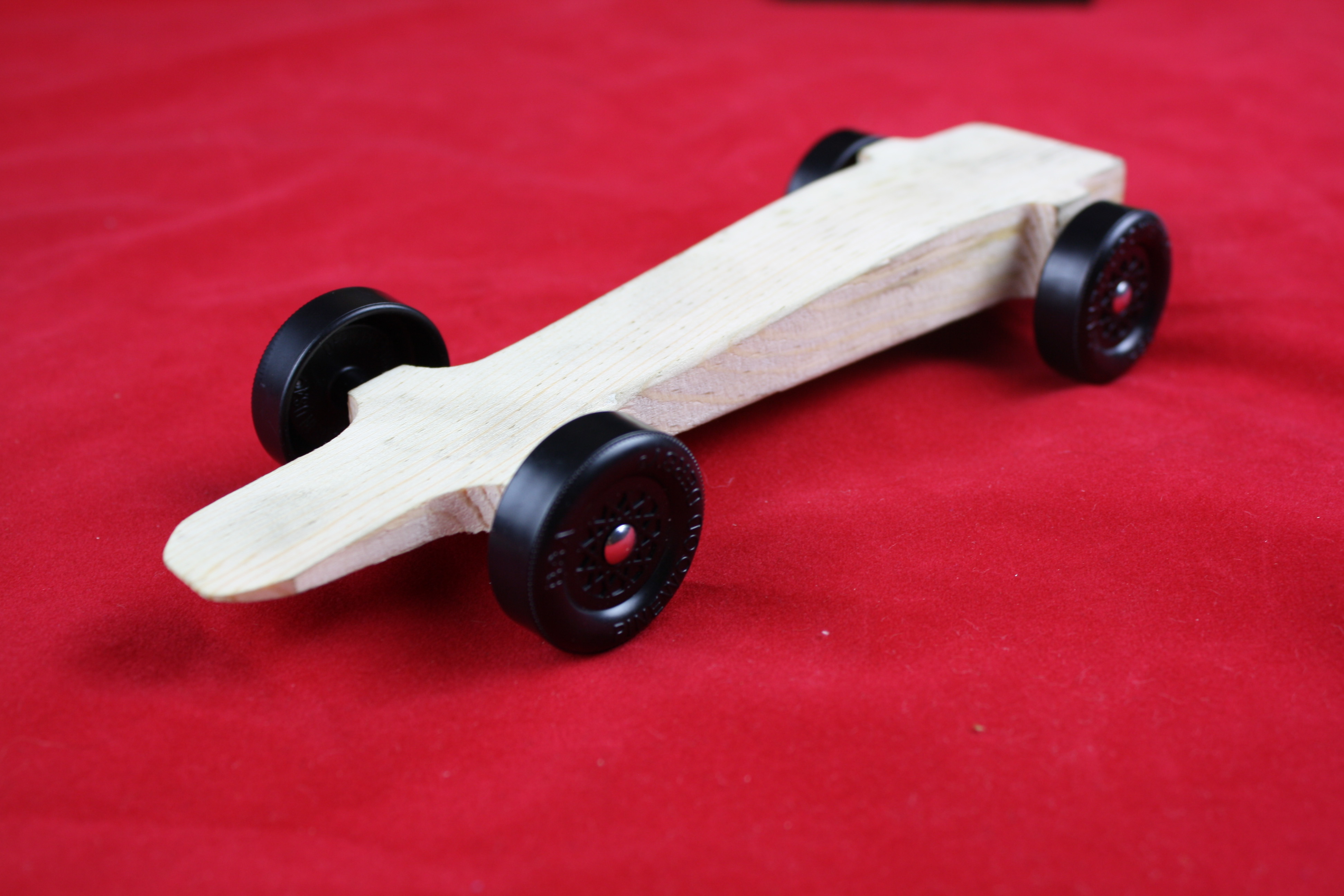
It’s okay to get creative with the look and design of your car. On the flip side of that, if your main goal is speed, you’ll need to keep it simple. To go fast, it’s all about aerodynamics, and the best shape is a simple wedge.
Determining the fastest shape for a Pinewood Derby car involves a delicate balance between aerodynamics and weight distribution. While various shapes have been experimented with over the years, one design consistently emerges as a top contender: the wedge.
The wedge shape, characterized by a tapered front and a wider rear, minimizes air resistance by allowing air to flow smoothly over the car’s surface. This streamlined design reduces drag, enabling the car to slice through the air with minimal resistance, thus maximizing speed on the track.
Additionally, the wedge shape facilitates optimal weight distribution, crucial for achieving stability and traction during the race. By concentrating the majority of the car’s weight towards the rear axle, the wedge design ensures that the wheels maintain optimal contact with the track, minimizing friction and maximizing speed.
While other shapes may offer unique advantages, such as increased stability or aesthetic appeal, the wedge remains a popular choice among Pinewood Derby enthusiasts seeking to maximize their car’s velocity and performance on race day.
Should I bake Pinewood Derby car?
Per the Pinewood Derby rules, the car’s weight shouldn’t exceed 5 ounces. One way to ensure your car doesn’t exceed the weight limit is to bake the block! Naturally, wood holds water, and water adds weight. You’ll want to help your Scout by baking the block in an oven at 250 degrees for one hour.
Baking a Pinewood Derby car is a controversial topic among scouting enthusiasts, with opinions divided on whether it’s advantageous or detrimental to the car’s performance. Proponents argue that baking the block of pine wood can reduce moisture content, making the car lighter and potentially faster on the track. Additionally, baking may help stabilize the wood and minimize warping, leading to better alignment and smoother performance.
However, opponents caution that baking the wood can also lead to unpredictable results, as it may cause the wood to dry out unevenly or even crack. Moreover, baking the block could inadvertently alter its density and compromise its structural integrity, potentially resulting in a less stable and slower car.
Ultimately, the decision to bake a Pinewood Derby car rests on personal preference and experimentation. Scouts and their families should carefully weigh the potential benefits against the risks before proceeding. Additionally, consulting with experienced derby participants or scouting leaders can provide valuable insights and guidance in making an informed decision.
Do heavier Pinewood Derby cars go faster?
More weight gives the car more potential energy from the starting height (about 4 feet) and makes the car go faster. Going over the maximum weight of 5.00 Oz will disqualify your car.
The question of whether heavier Pinewood Derby cars go faster is a common one among participants and spectators alike. While intuition might suggest that a heavier car would possess greater momentum and therefore speed, the reality is a bit more nuanced. In the world of Pinewood Derby racing, weight distribution and overall aerodynamics play significant roles in determining a car’s speed.
In fact, the official rules of the Pinewood Derby often include weight restrictions to level the playing field and ensure fair competition. While adding weight can potentially increase a car’s speed, it must be done strategically to avoid negatively impacting its performance. Too much weight can lead to increased friction with the track and decreased acceleration.
Ultimately, the key to achieving optimal speed lies in finding the right balance between weight, aerodynamics, and friction. Experimentation, careful tuning, and attention to detail are essential for crafting a Pinewood Derby car that maximizes speed while adhering to the rules of fair competition.
Is a shorter Pinewood Derby car faster?
Yes, you can make your car shorter but it is not recommended. A shorter car will have a lower center of mass at the start so it will have less energy to convert into speed when going down the track.
The question of whether a shorter Pinewood Derby car is faster is a common one among participants and enthusiasts alike. While the length of the car can indeed influence its speed, it’s just one of many factors to consider.
In some cases, shorter cars may have a slight advantage due to reduced weight and decreased air resistance. However, this advantage can be offset by other design elements such as weight distribution, wheel alignment, and aerodynamics.
Ultimately, the key to building a fast Pinewood Derby car lies in finding the right balance between various factors. Experimentation, testing, and careful attention to detail are essential in maximizing performance. While a shorter car may have its advantages, it’s essential to focus on overall design and optimization to achieve the best results on race day. Whether long or short, a well-crafted and properly tuned Pinewood Derby car has the potential to excel on the track.
Why is my pinewood derby car slow?
Your pine wood derby car moves from the force of gravity and is slowed down from friction. Friction acts like brakes. Reduce friction and your car goes faster. Increase friction and your car slows down.
If your Pinewood Derby car is lagging behind on the track, several factors may be contributing to its sluggish performance. Firstly, examine the weight distribution of your car. A poorly balanced car can hinder speed and stability. Ensure that the majority of the weight is concentrated towards the rear axle, as this maximizes the potential energy transferred into forward motion.
Another common issue is friction. Inspect the wheels and axles for any imperfections or misalignment that could cause unnecessary drag. Lubricate the axles with graphite or another suitable lubricant to reduce friction and improve speed.
Additionally, aerodynamics play a crucial role in the performance of your car. Smooth out any rough edges or protruding parts that may create air resistance. Streamlining the shape of your car and adding sleek fenders can further minimize drag and enhance speed.
Lastly, check the track itself for any irregularities or debris that could impede your car’s progress. By addressing these factors and fine-tuning your car’s design and mechanics, you can optimize its speed and competitiveness on race day.
Can you add wood to a Pinewood Derby car?
Other materials such as wood, plastic or metal may be added to the original block of wood from the official kit as long as the car is within the allowed dimensions.
Yes, adding wood to a Pinewood Derby car is a common practice among participants looking to customize their vehicles or fine-tune their performance. While the standard Pinewood Derby kit provides a block of pine wood, the rules typically allow for modifications and additions as long as the car meets certain size and weight restrictions.
Adding wood to a Pinewood Derby car can serve various purposes. For instance, extra wood may be strategically placed to adjust the car’s weight distribution, helping to optimize its speed and stability on the track. Additionally, wood can be used to sculpt intricate designs, create aerodynamic features, or reinforce critical areas of the car’s structure.
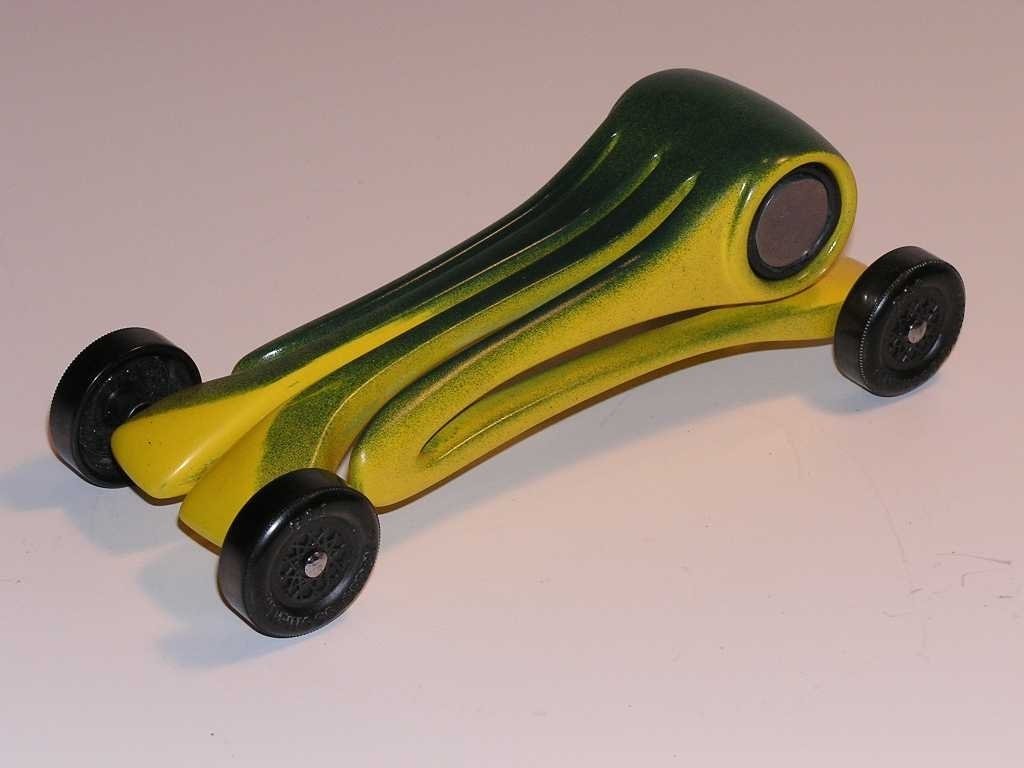
Whether it’s shaping a sleek body, carving out fenders for improved aerodynamics, or simply experimenting with different weight configurations, incorporating additional wood allows participants to unleash their creativity and fine-tune their cars for peak performance on race day.
Conclusion
The addition of fenders to Pinewood Derby cars significantly enhances both the aesthetics and performance of these miniature racing vehicles. Through meticulous design and careful craftsmanship, fenders provide more than just visual appeal; they serve as functional components that optimize aerodynamics and stability on the track. By reducing air resistance and minimizing drag, fenders contribute to faster speeds and smoother maneuvers, giving racers a competitive edge.
Moreover, the creative possibilities offered by fenders allow participants to express their individuality and innovation in the design process. Whether sleek and streamlined or bold and eye-catching, fenders add a unique touch to each car, reflecting the personality and ingenuity of its creator.
Beyond the competitive aspect, the experience of building Pinewood Derby cars with fenders fosters valuable skills such as problem-solving, engineering, and attention to detail. Participants learn to experiment with different designs, materials, and techniques, honing their abilities through trial and error.
Overall, the incorporation of fenders into Pinewood Derby car design not only elevates the excitement of the race but also cultivates a spirit of creativity and craftsmanship among participants. As a cherished tradition that combines innovation with friendly competition, the Pinewood Derby continues to inspire future generations of young racers and engineers to push the boundaries of what’s possible in the world of miniature car racing.

